This article breaks down how childfree luxury travel spending works in practice—showing where money is reallocated for privacy, ease, and deeper experiences instead of more space or noise.

The “Invisible” Spend
Most travel articles treat luxury like a fixed target:
five-star hotels, oversized rooms, elaborate breakfasts, and menus that try to please everyone. Luxury, in this framing, is about adding more—more space, more food, more activities, more options.
But that definition quietly assumes something else too: noise, compromise, coordination, and constant negotiation.
For childfree adults—luxury looks fundamentally different. It isn’t louder. It isn’t necessarily bigger. And it definitely isn’t busier. Luxury is the absence of friction and the presence of choice.
The real shift isn’t that childfree travelers spend more money. It’s that they spend the same money on things families simply cannot afford to prioritize—like twelve uninterrupted hours of sleep, a silent breakfast, or a restaurant that doesn’t stock high chairs. This difference becomes clearer when you look at how childfree luxury travel diverges from family luxury travel—not in price, but in priorities.
This is the invisible spend. The money that doesn’t show up as “extras,” but radically changes how a trip feels.
The Childfree Travelers’ Spending Philosophy: ROI vs. Memories
For families, travel spending is often framed around memories.
Did everyone have fun? Was it worth it? Will the kids remember this?
For Childfree travelers, the lens is different. The question becomes:
Did this make my life easier, calmer, richer—right now?
Luxury, then, becomes about ROI. Not financial return, but Joy ROI. This mindset shapes how luxury childfree travel is designed — from adults-only hotels to intentional planning that prioritizes ease over excess.
Ease becomes the real upgrade.
Silence becomes a feature.
Privacy becomes a line item worth paying for.
And once you see travel through that lens, the trade-offs become obvious.
The moment this clicked for me wasn’t at a landmark or a meal. It was at an airport. I’d paid for fast-track security and a quiet lounge instead of upgrading the hotel. I walked past the lines, sat down with a coffee, and realized my shoulders had dropped for the first time in weeks. That was the upgrade. Not the trip itself — the absence of stress inside it. That’s when luxury stopped being about memories and started being about how quickly I could feel human again.
Trade-Off #1: Square Footage vs. Sanctuary
Family Logic:
Book the three-bedroom villa so the kids have space, a playroom, and somewhere to burn energy. You pay for volume.
Childfree Trade-Off:
Book the plunge-pool suite in a 15-room boutique hotel. You pay for exclusivity. You pay for a property where the only sound is the wind or the waves—not a poolside DJ or a toddler’s tantrum at 7:00 AM.
The prices are often identical. The experience is not.
Real Example:
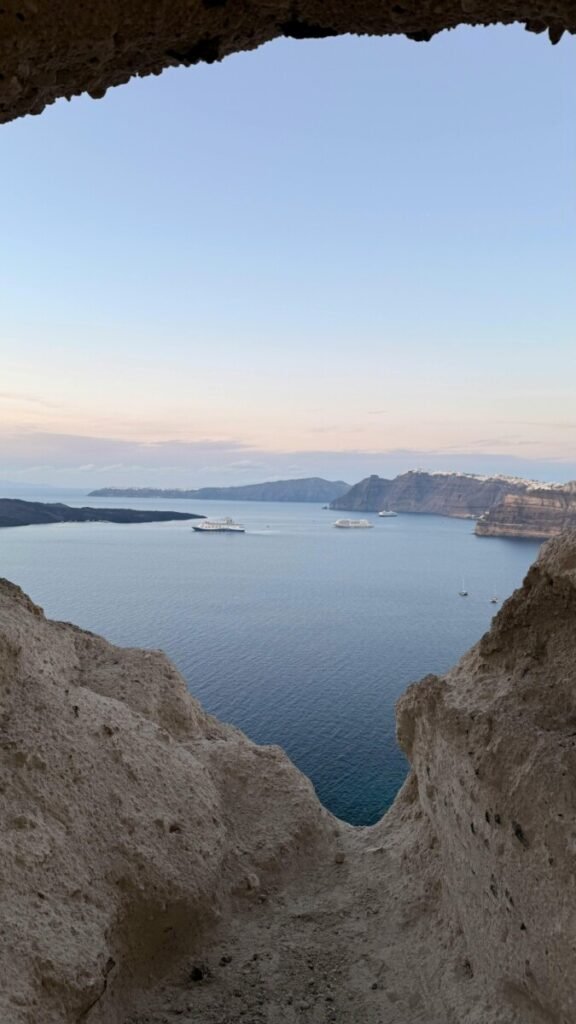
In Santorini, a family of four might spend $1,200 per night on a multi-level house in a busy area—stairs, shared courtyards, neighbors coming and going.
A Childfree traveler spends that same $1,200 on a private cave suite carved into the caldera, with a personal terrace, sunset views, 24/7 butler service, and absolute silence.
Same budget.
One buys space.
The other buys sanctuary.
This is the Bedroom vs. Balcony trade-off in its purest form. You give up extra rooms no one needs and redirect the money toward a single, perfect square meter of peace.
Trade-Off #2: Managing Kids vs. Managing Stress
Family Logic:
Allocate $400–$500 per day for a kids’ club, babysitter, or nanny. You pay for outsourcing care.
Childfree Trade-Off:
Allocate $400–$500 per day for private airport transfers, fast-track immigration, and VIP lounge access. You pay for frictionless logistics.
The point isn’t indulgence. It’s load management.
One version of luxury manages people.
The other manages systems.
A Childfree traveler isn’t trying to escape responsibility—they’re trying to avoid unnecessary friction. Waiting in taxi lines, hauling luggage, decoding transit systems after a long flight—these are solvable problems if you’re willing to spend strategically.
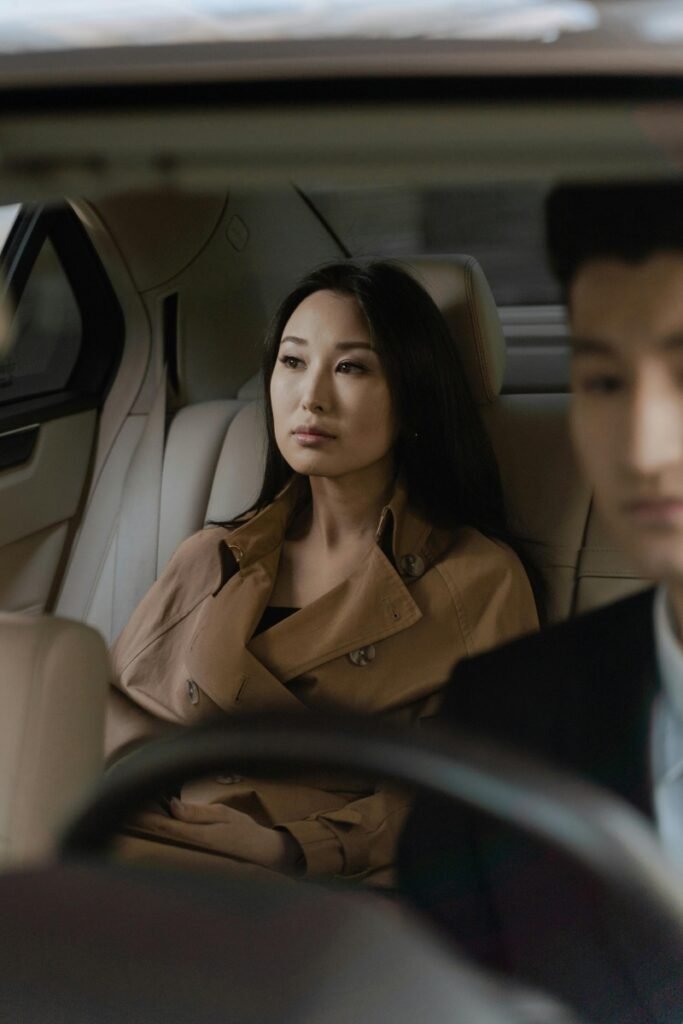
This is where the Car Rental vs. Chauffeur trade-off shows up. Instead of renting an SUV and navigating unfamiliar roads, a private driver becomes the upgrade—not for status, but for presence. You arrive calm instead of depleted.
Trade-Off #3: The Resort Buffet vs. The Michelin Star

Family Logic:
Stay at an all-inclusive resort because it’s easy. Meals are predictable, fast, and flexible. You pay for convenience.
Childfree Trade-Off:
Stay at a room-only design hotel and spend the food budget on one unforgettable meal. You pay for sensory depth.
A family’s food budget is spread thin across many meals, snacks, and preferences. A Childfree traveler collapses that budget into a single, intentional experience: a three-hour tasting menu, a wine pairing that stretches into the night, a chef’s counter where the entire trip seems to slow down.
This is the Resort Buffet vs. Michelin Star trade-off. Less frequency, more meaning. Fewer calories, deeper memory.
I’ve done trips where meals were constant and forgettable. I’ve also done trips with one planned dinner and no backup. The second version always leaves a clearer imprint.
Trade-Off #4: Duration vs. Depth
The 2026 data from [ABTA] confirms that childfree adults are leading the shift toward ‘Slower, Deeper’ travel, valuing the mental health benefits of a trip more than any other age or lifestyle group.
Traditional Luxury:
A 10-day all-inclusive vacation where the goal is to keep everyone occupied, entertained, and regulated.
Childfree Luxury:
A 5-day, high-intensity immersion—private guides, wellness retreats, photography workshops, or cultural deep dives.
The budget often stays the same. The experience becomes denser.
This is where childfree travelers quietly redefine value. Fewer days off work, fewer transitions, fewer “filler” moments—but every hour feels intentional.
Luxury isn’t stretching time.
It’s compressing quality.

The Comparison Table: Where the Money Goes
Here’s how the same $5,000 luxury travel budget looks when allocated differently:
| Expense Category | The Family Spending ($5k) | The Childfree Spending ($5k) |
|---|---|---|
| Flights | 4 Economy seats ($2,400) | 1 Business Class seat ($2,200) |
| Lodging | 2-bedroom Airbnb ($1,500) | Boutique Junior Suite ($2,000) |
| Food | Casual dining & groceries ($800) | Michelin-star meal + wine bar ($600) |
| Extras | Theme parks & souvenirs ($300) | Private driver / spa day ($200) |
The “Solo Tax” as a Privacy Premium
Solo travelers often talk about the “solo tax”—the single supplement, the higher per-person rate, the room designed for two.
But reframed honestly, this isn’t a penalty. It’s a privacy premium.
You’re not paying more because you’re alone.
You’re paying more because you refuse roommates—literal or logistical.
No shared bathrooms. No negotiating bedtimes and no coordinating itineraries.
When you stop apologizing for that, the math suddenly makes sense.
Whether you’re traveling solo or as a couple, the spending logic shifts—something we unpack more deeply in the real difference between DINK and SINK travel.
The Psychology of the “No-Explanation” Spend
Families often justify luxury purchases by wrapping them in purpose: educational experiences, bonding time, exposure to culture.
Childfree travelers don’t need a narrative to legitimize pleasure.
A $200 private yoga session doesn’t have to be “transformational.”
A photography workshop doesn’t need to produce a career pivot.
A spa afternoon doesn’t need to earn its keep.
This is guilt-free indulgence—the ability to spend purely for enjoyment, without translating it into value for anyone else.
That freedom changes not just how money is spent, but how it feels.
Conclusion: Curation Is the Ultimate Flex
Childfree luxury isn’t about being richer.
It’s about being precise.
When you’re not paying for extra people, extra space, extra noise, or extra compromise, every dollar works harder. The result isn’t extravagance—it’s efficiency.
Luxury becomes curated, not accumulated.
And the final truth is simple:
When you aren’t paying for “extra,” you get to pay for “better.”
That’s the quiet advantage childfree travelers rarely talk about—but always feel.