This article breaks down the most common childfree travel mistakes—and why freedom alone doesn’t guarantee better trips. You’ll learn how to travel with more intention, energy, and ease without overplanning or burning out.

Being childfree comes with a quiet kind of travel privilege—one that most mainstream travel advice doesn’t really understand.
You don’t have to plan around school calendars or kid-friendly hotels or “activities for all ages.” You can travel for rest, pleasure, curiosity, or absolutely no reason at all.
And yet, even with all that freedom, childfree travelers still make mistakes. Not loud, obvious ones—but subtle, mindset-driven ones that creep in because most travel advice was never designed for us.
Over time, these patterns repeat. You come home from a trip feeling oddly tired. Or underwhelmed. Or wondering why something that looked perfect on paper didn’t quite land.
Let’s talk about the most common childfree travel mistakes—and how to avoid them in 2026 and beyond.
Most childfree travel mistakes don’t come from lack of freedom, but from borrowed assumptions about how travel should work—which is why intentional childfree travel matters more than ever.
Who are you listening to?
Mistake #1: Following Family-Centric Travel Advice Without Questioning It

This is the big one.
Most travel blogs, itineraries, and “must-do” lists are built for families—even when they pretend not to be. The pacing, the activities, the accommodations choices all assume:
- early mornings
- packed days
- “making the most of it”
Childfree travelers don’t need to maximize output. They need to optimize experience.
If you’ve ever come back from a trip thinking, Why did I rush so much?, chances are you borrowed a family-style itinerary without realizing it.
How to avoid it:
Before booking or planning, ask one simple question:
Is this schedule built for energy—or for obligation?
One of the best childfree travel tips is learning to design trips around how you want to feel, not how much you want to fit in.
Mistake #2: Copying Other People’s Travel Styles
This isn’t about escaping family-centric advice—it’s about realizing that even within the childfree world, not all travel styles translate.
DINK couples often fall into comparison traps.
SINK travelers sometimes borrow couple-style travel rhythms that don’t suit them.
These DINK vs SINK travel differences become especially visible when planning alone, where flexibility still needs structure and no one else is there to course-correct.
Just because another childfree person loved a trip doesn’t mean it fits your energy, income, or season of life.
A friend swore a destination was magical if you stayed busy from morning to night. I tried it their way and realized I loved the city most when I ignored half the plan.
How to avoid it:
Audit your own travel personality:
- fast or slow?
- structured or fluid?
- social or solitary?
The best trips are designed inward, not outward.
How are you treating your body/energy?
Mistake #3: Over-Optimizing for Cost Instead of Energy
Childfree travelers are often great with money. No school fees. No childcare. More financial autonomy.
Ironically, that can lead to one of the sneakiest mistakes childfree travelers make: choosing the cheapest option even when it costs more energy.
The early-morning flight.
The far-from-everything hotel.
The “great deal” that adds three transfers.
I booked a hotel because it was cheaper and technically “only 20 minutes away.” It turned out those 20 minutes involved two buses, a walk uphill, and my patience. I saved money and spent energy I didn’t have.
Many childfree travelers allocate money differently on childfree trips, choosing rest, timing, and ease over squeezing value from every rupee or dollar.
On paper, you saved money. In reality, you paid with exhaustion.
How to avoid it:
Start thinking of travel spending in terms of energy ROI. A slightly better flight time, a closer hotel, or reliable transport can completely change how a trip feels—especially for SINK solo travel, where all logistics fall on one person.
Mistake #4: Underestimating How Much Rest and Quiet You Need
This one isn’t about bad planning or budget trade-offs—that’s already been discussed. This is about what your nervous system needs once you arrive.
One of the most common childfree travel mistakes is assuming that freedom automatically equals energy.
Without kids, there’s this quiet belief that you should always be able to do more—later nights, earlier mornings, fuller days. Rest starts to feel optional. Silence feels like a “nice-to-have.”
I once booked what was described as a lively hotel in a great location. It delivered exactly that—music, chatter, movement, energy. By the second night, I realized I wasn’t tired from sightseeing. I was tired from noise. What I actually wanted wasn’t a better view or a bigger room. It was quiet.
Childfree travelers often underestimate how much mental recovery happens in stillness. Sleeping in. Slow mornings. Calm neighborhoods. Soundproof rooms. These aren’t indulgences—they’re structural support for enjoyment.
How to avoid it:
Design rest into the trip instead of squeezing it in when you’re exhausted. Choose accommodations for silence, not buzz. Leave space between plans. In 2026, one of the smartest childfree travel tips is recognizing that quiet isn’t empty—it’s restorative.

What is your mindset about time?
Mistake #5: Treating Every Trip Like a “Once-in-a-Lifetime” Event
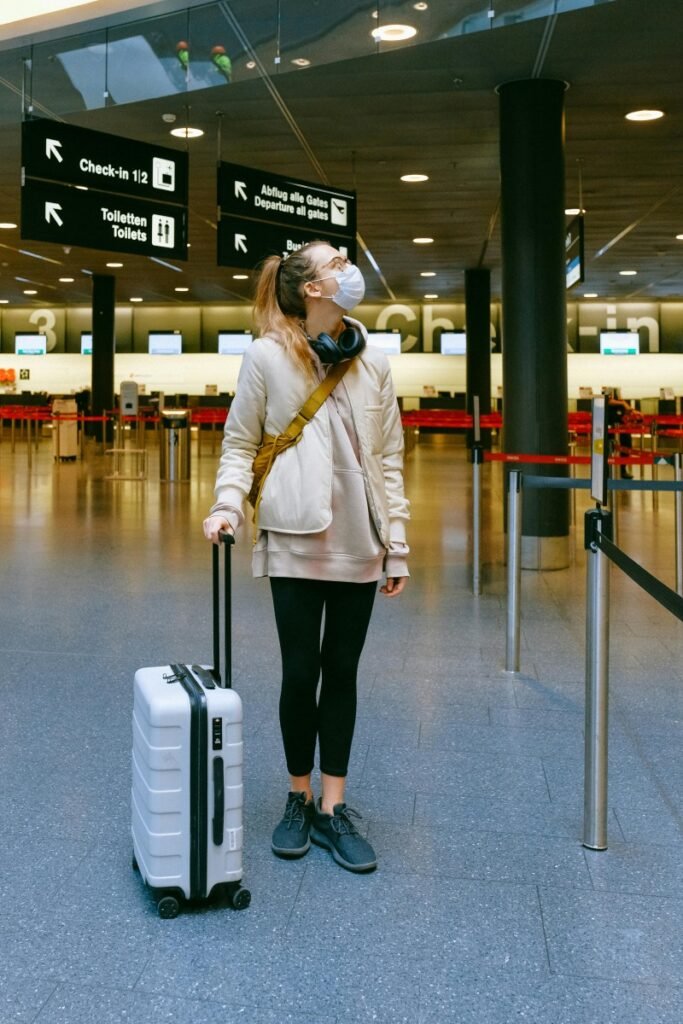
When you don’t have kids, there’s an unspoken pressure to “do travel right.”
So trips become intense. Overplanned. Emotionally loaded.
Every destination has to be meaningful. Transformational. Worthy of photos and stories.
But not every trip needs to change your life.
Some trips are allowed to be… nice.
How to avoid it:
Normalize low-stakes travel. A quiet city break. A repeat destination. A hotel-first holiday.
One of the most overlooked childfree travel tips is letting travel be regular, not performative.
Mistake #6: Thinking You’ll “Travel More Later”
This might be the most dangerous mistake of all.
Childfree travelers often assume there will always be time. Later. Next year. When things calm down.
But energy, health, and curiosity don’t run on infinite timelines.
How to avoid it:
Travel in alignment with now. Shorter trips. Closer destinations. More frequent breaks.
The real privilege of a childfree life isn’t unlimited travel—it’s intentional travel.
What are your physical/timing habits?
Mistake #7: Packing for Hypothetical Problems Instead of Real Needs
Childfree travelers are often independent and self-reliant—which can turn into overpacking “just in case.”
Extra shoes. Backup outfits. Things for situations that never happen.
On one trip, I packed three pairs of shoes for situations that never happened. The only thing I wore every day was the same comfortable pair I almost left out.
It’s a subtle mindset leftover from responsibility culture: What if something goes wrong?
How to avoid it:
Pack for your actual travel style, not imaginary scenarios. Lighter luggage equals more flexibility, easier movement, and less friction—especially important for SINK solo travel mistakes where you’re managing everything yourself.
Mistake #8: Ignoring the Power of Off-Season Travel
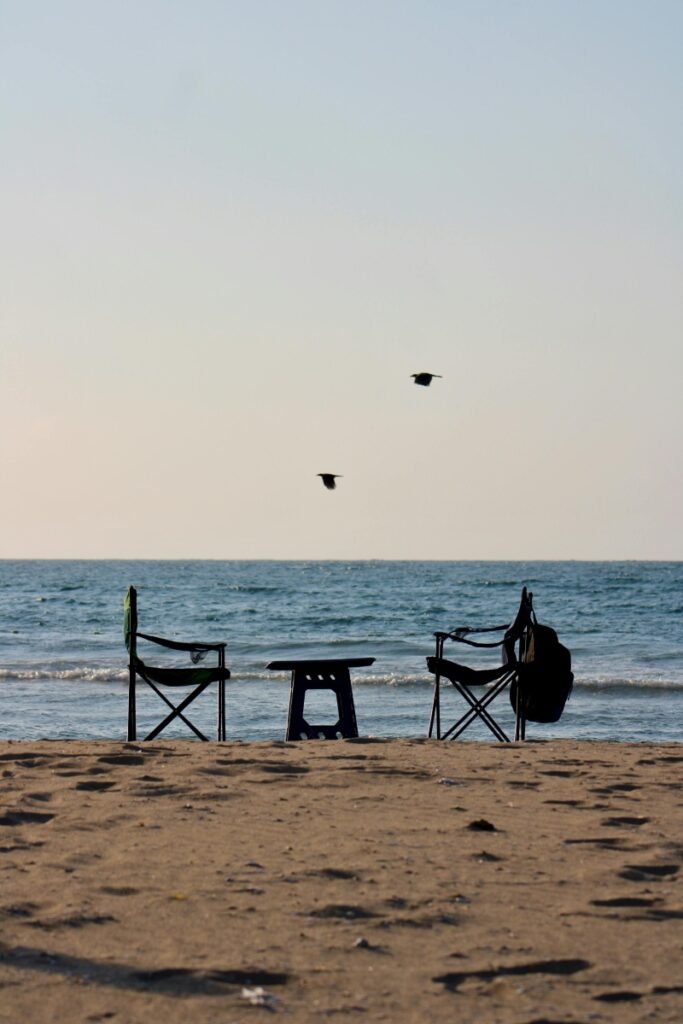
Childfree travelers don’t have to follow school calendars—and yet many still do.
Peak season prices. Crowded attractions. Overstimulating environments.
Why? Habit.
Childfree people don’t have to avoid “family” spots—they just have to change the timing. Seeing a theme park at 9:00 PM on a Tuesday in October is a completely different experience than a Saturday in July.
How to avoid it:
Lean into your biggest advantage. Shoulder seasons. Midweek stays. Quiet months.
Off-season travel is one of the smartest ways to upgrade experiences without upgrading budgets—a classic childfree win.
Final Thought
Most childfree travel mistakes don’t come from lack of freedom. They come from borrowed assumptions.
When you stop traveling like you’re supposed to—and start traveling like you’re designed to—you don’t just take better trips.
You come home feeling like yourself again.
And that’s the kind of travel no checklist can teach.